Comprehensive Guarante To Meet Your Diverse Needs
High-definition printing: bright colors and clear patterns
High-quality and durable: wear-resistant and stretch-resistant


High-definition printing: bright colors and clear patterns
High-quality and durable: wear-resistant and stretch-resistant
2026-09-08 10:02:03
Labels are used across almost every industry to identify products, provide information, support branding, and improve product traceability. From food packaging and pharmaceutical bottles to logistics cartons and retail products, the right label can affect both appearance and functionality. When choosing a label, businesses need to consider more than just the printed design. The adhesive system, face material, manufacturing process, application method, and service environment can all influence the final performance.
So, what are the three types of labels? In general, labels can be broadly classified into Self-Adhesive Labels, wet glue labels, and heat-shrink or pressure-sensitive film labels, depending on how they are attached to the product and how the label material responds during application. Among these options, Self-Adhesive Labels are widely used because they can be applied efficiently without additional liquid glue or complex heating equipment.
This article explains the working principles, materials, manufacturing processes, advantages, disadvantages, and typical applications of these three label types to help businesses choose a suitable labeling solution.
Self-adhesive labels, also known as pressure-sensitive labels, consist of several functional layers. A typical construction includes a face stock, pressure-sensitive adhesive, and release liner. Depending on the application, the face stock can be made from paper, PET, PP, PE, or other specialty materials.
The working principle is relatively simple. A pressure-sensitive adhesive is coated onto the back of the label material. The adhesive does not normally require water, heat, or a separate curing process. When the release liner is removed, the exposed adhesive surface is pressed against the target substrate. Pressure activates the adhesive contact, allowing the label to bond to surfaces such as glass, plastic, metal, cardboard, or coated packaging.
The performance of a self-adhesive label depends heavily on the adhesive formulation. Common adhesive systems include acrylic adhesive and hot melt adhesive. Permanent adhesives provide strong long-term bonding, while removable adhesives are designed to allow the label to be removed with less residue. For products exposed to moisture, temperature changes, chemicals, or outdoor conditions, the adhesive needs to be selected according to the actual operating environment.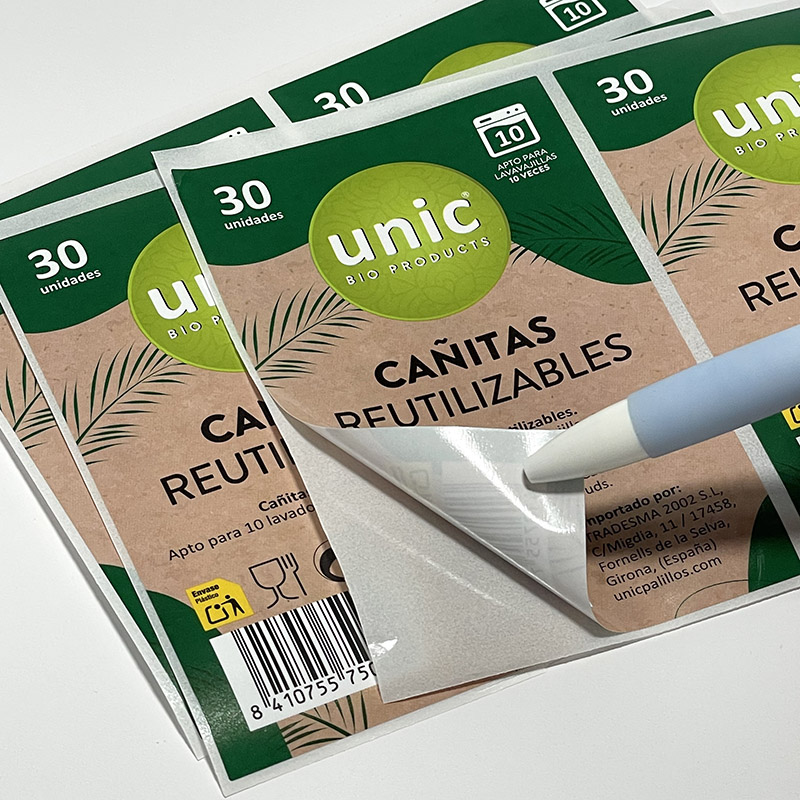
The manufacturing process generally starts with the selection of the face stock and release liner. The pressure-sensitive adhesive is then applied to the back of the face material through a controlled coating process. The adhesive-coated material may undergo drying, curing, or cooling depending on the adhesive technology. The material is then laminated with the release liner and converted into rolls or sheets.
After the basic label stock is produced, additional processes can include flexographic printing, digital printing, offset printing, die cutting, slitting, laminating, varnishing, and surface coating. Die cutting is used to create the required label shape while keeping the release liner intact, allowing the finished labels to be dispensed or applied efficiently.
Paper is one of the most common face materials because it is economical and suitable for general-purpose labeling. For applications requiring greater durability, synthetic materials such as PET, PP, and PE films can provide improved resistance to moisture, abrasion, chemicals, and tearing.
The release liner is commonly made from glassine paper, kraft paper, or PET film. Silicone release coatings are often applied to the liner to control the release force between the liner and adhesive. This allows the label to be peeled away smoothly during application.
The main advantage of self-adhesive labels is application efficiency. They can be applied manually or using automatic labeling equipment, making them suitable for high-volume production lines. They also offer a wide range of material, adhesive, shape, color, and finishing options.
However, self-adhesive labels can have limitations. Adhesive performance may change under extreme temperatures or on difficult substrates. Poor surface preparation, dust, oil, moisture, or low surface energy plastics can also reduce adhesion. In addition, the release liner creates additional waste compared with some linerless labeling systems.
Self-adhesive labels are widely used for food packaging, beverage bottles, cosmetics, household products, pharmaceuticals, electronics, industrial components, logistics, retail packaging, and product identification. They are also commonly used for barcodes, QR codes, batch numbers, warning labels, shipping labels, and product information labels.
For companies sourcing labels in bulk, working with an experienced self adhesive label supplier can make it easier to select the correct face material, adhesive type, liner, printing process, and finishing method for a specific application.
Wet glue labels are another traditional labeling method. Unlike pressure-sensitive labels, these labels do not normally contain a pre-applied pressure-sensitive adhesive. Instead, a separate liquid adhesive is applied to the label or packaging surface immediately before the label is attached.
During application, an adhesive such as water-based starch glue, dextrin adhesive, or casein-based adhesive is applied to the reverse side of the label. The label is then positioned on the product surface. As the adhesive dries, it forms a bond between the label and substrate.
This system is particularly suitable for certain glass bottles, paperboard packaging, cans, and containers where the labeling line is designed specifically for wet glue application. The final bond depends on adhesive selection, drying conditions, substrate characteristics, and application pressure.
Wet glue labels are commonly produced using paper as the main label stock. Depending on the desired appearance, the paper can be coated or uncoated. Printing methods may include offset printing, flexographic printing, or gravure printing. After printing, the labels are cut into individual pieces or supplied in reels according to the requirements of the labeling machine.
Unlike self-adhesive labels, the adhesive is normally handled separately during the labeling process. This can simplify the label structure but requires appropriate adhesive application equipment.
One advantage of wet glue labels is cost efficiency for certain high-volume applications. They can also provide a clean appearance on suitable glass and paper-based packaging. In some applications, the label can be removed relatively easily by soaking the container in water.
On the other hand, wet glue labeling requires an adhesive application system and more control over glue quantity and drying conditions. Excess adhesive can cause contamination, while insufficient adhesive may result in poor bonding. The process can therefore require more equipment and production control than pressure-sensitive labeling.
Wet glue labels are often found on glass bottles, beverage containers, food packaging, cans, and selected paperboard products. They remain an option for manufacturers that prioritize economical labeling for large production volumes.
The third major category includes heat-shrink labels and other film-based labeling solutions. Heat-shrink labels are different from pressure-sensitive labels because they rely on the physical properties of polymer film rather than a permanent adhesive bond.
A heat-shrink label is manufactured from a polymer film with controlled shrink characteristics. After the printed film sleeve is positioned around a container, heat is applied using steam tunnels or hot-air shrink tunnels. The film contracts and conforms closely to the shape of the container.
This makes heat-shrink labeling particularly useful for products with irregular shapes, curved surfaces, or containers where full-body graphics are required.
Common materials include PVC, PETG, OPS, and other shrinkable polymer films. The film is printed with the required graphics and then formed into a sleeve through processes such as seaming and film conversion. During application, the sleeve is placed over the container before passing through a controlled heating system.
Compared with conventional Paper labels, shrink film can provide 360-degree decoration around a container. It can also accommodate detailed graphics, multiple colors, product information, and tamper-evident features.
The major advantage is design flexibility. Heat-shrink labels can cover complex container geometries and provide high-impact packaging graphics. They can also integrate tamper-evident functions around bottle caps or closures.
However, the application process requires specialized equipment and controlled heat. The shrink behavior must be matched to the container shape and film specification. Incorrect temperature or shrink ratios can result in wrinkles, distortion, or poor positioning.
Heat-shrink labels are commonly used for beverages, cosmetics, household products, personal care products, food containers, and promotional packaging. They are especially useful when manufacturers need full-body decoration or labels for unusually shaped containers.
The three label types differ mainly in their attachment method, material structure, production equipment, and application environment. Self-adhesive labels are convenient and versatile because the adhesive is already integrated into the label construction. Wet glue labels can be economical for specific high-volume packaging applications but require separate adhesive application. Heat-shrink labels offer excellent coverage and design flexibility but require heat-shrink equipment and suitable film materials.
| Label Type | Attachment Method | Common Materials | Main Advantage | Typical Applications |
|---|---|---|---|---|
| Self-Adhesive Label | Pressure-sensitive adhesive | Paper, PET, PP, PE | Easy and flexible application | Retail, food, cosmetics, logistics, industrial products |
| Wet Glue Label | Liquid adhesive | Paper, coated paper | Cost-effective for high-volume use | Bottles, cans, food and beverage packaging |
| Heat-Shrink Label | Heat-induced film shrinkage | PVC, PETG, OPS | Full-body and complex-shape decoration | Beverages, cosmetics, household products |
The right choice depends on the product surface, packaging shape, environmental conditions, production speed, printing requirements, and overall labeling cost. For flat or slightly curved surfaces where fast application and flexible customization are important, self-adhesive labels are often a practical option. If the product is a high-volume glass bottle and the production line already uses liquid adhesive, wet glue labels may be suitable. For complex-shaped containers requiring 360-degree graphics, heat-shrink film can provide better coverage.
Businesses should also consider adhesive strength, surface energy, temperature resistance, moisture resistance, chemical resistance, label thickness, release liner, die-cutting accuracy, and printing compatibility before selecting a label material.
When purchasing customized labels, it is useful to communicate the product substrate, application temperature, storage conditions, label dimensions, printing requirements, expected service life, and application method to the supplier. Professional self adhesive label suppliers can then recommend an appropriate combination of face stock, adhesive, liner, and finishing process.
A professional supplier can provide more than printed label rolls. Label construction often requires careful coordination between material selection, adhesive formulation, coating thickness, printing, die cutting, slitting, and quality control. A supplier with appropriate converting capabilities can adjust the label structure according to the product and application requirements.
For standard blank or unprinted labels, a plain self adhesive label manufacturer can provide different sizes, materials, adhesive options, and roll configurations for thermal printing, barcode printing, product identification, or internal production use. For customized applications, the supplier can also support artwork printing, special shapes, surface finishes, and application-specific adhesive solutions.
So, what are the three types of labels? The three commonly used categories are self-adhesive labels, wet glue labels, and heat-shrink or film labels. Each type uses a different attachment principle and manufacturing process, which gives it different advantages and limitations.
Self-adhesive labels stand out for their versatility, convenient application, and wide range of material and adhesive combinations. Wet glue labels remain useful for specific high-volume packaging applications, while heat-shrink labels are well suited to complex containers and full-body packaging decoration.
Understanding the differences between these label types can help manufacturers, packaging companies, and purchasing teams make a more informed decision. The best label is not necessarily the one with the lowest unit price, but the one whose material structure, adhesive system, manufacturing process, and application performance match the actual requirements of the product.
2/F, No. 23, Um Yuan Xin Road, Wentang Community, Dongcheng Street, Dongguan City, Guangdong Province, China
+86 137-1733-9986 +86-0769-22299566


