Comprehensive Guarante To Meet Your Diverse Needs
High-definition printing: bright colors and clear patterns
High-quality and durable: wear-resistant and stretch-resistant


High-definition printing: bright colors and clear patterns
High-quality and durable: wear-resistant and stretch-resistant
2026-09-08 10:14:04
Self-adhesive materials are widely used in packaging, logistics, retail, electronics, automotive, and industrial labeling. A typical Self-Adhesive Label consists of three main layers: face material, pressure-sensitive adhesive (PSA), and release liner. Different combinations of these materials determine the label's adhesion, durability, printability, and resistance to moisture, heat, and chemicals.
The most common face materials include paper, PET, PP, PE, and PVC.
Paper self-adhesive materials are economical and easy to print, making them suitable for product labels, shipping labels, barcode labels, and retail applications. However, paper generally has lower resistance to water, abrasion, and outdoor conditions.
PET self-adhesive materials offer excellent dimensional stability, tensile strength, moisture resistance, and chemical resistance. They are often used for electronics, automotive components, industrial labels, and applications requiring long-term durability.
PP self-adhesive materials provide good flexibility, moisture resistance, and printability. They are commonly used for packaging, cosmetics, food containers, and household products.
PE self-adhesive materials are highly flexible and can conform well to curved or squeezable surfaces. They are suitable for bottles, tubes, flexible packaging, and chemical containers.
PVC self-adhesive materials offer flexibility and durability and can be used for certain industrial and outdoor labeling applications, depending on the requirements of the target market.
Most Self-Adhesive Labels use pressure-sensitive adhesive. Unlike conventional glue, PSA does not normally require water, heat, or a separate activation process.
When pressure is applied, the adhesive flows into microscopic irregularities on the substrate, increasing the contact area and creating a bond. Important adhesive properties include initial tack, peel adhesion, shear strength, and cohesion.
Different adhesive types are designed for different requirements. Permanent adhesives provide strong, long-lasting bonding, while removable adhesives allow labels to be removed more easily under suitable conditions. Acrylic and rubber-based adhesives are also widely used depending on the required adhesion, temperature resistance, and aging performance.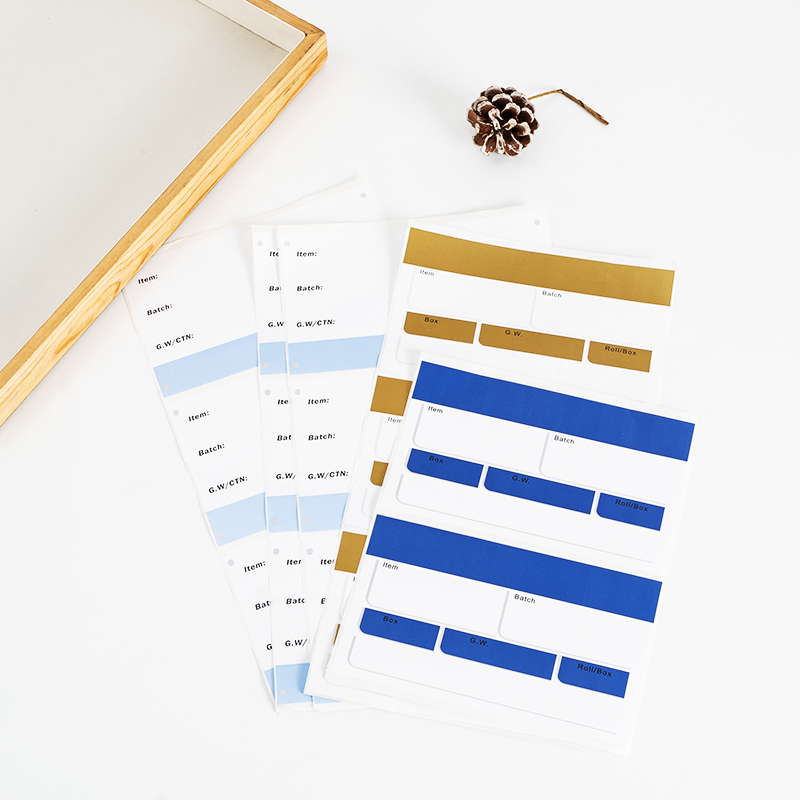
The manufacturing process normally includes material selection, adhesive formulation, coating, drying or curing, lamination, slitting, and quality inspection.
The adhesive is precisely coated onto the face material or release liner and then laminated to form the self-adhesive construction. Depending on the application, additional processes such as surface treatment, top coating, varnishing, or protective film lamination may be added.
Manufacturers typically check adhesive coat weight, peel strength, tack, release performance, dimensional stability, and surface quality before shipment.
The main advantage of self-adhesive materials is convenience. They can be applied quickly without using additional glue and are suitable for both manual and automated labeling.
They also offer a wide selection of materials, adhesives, sizes, finishes, and printing options.
However, adhesive performance can be affected by the substrate, temperature, humidity, surface cleanliness, and application pressure. Choosing an unsuitable adhesive may result in poor adhesion, edge lifting, adhesive residue, or premature label failure.
Self-Adhesive labels are used in many industries, including packaging, logistics, retail, electronics, automotive, food, cosmetics, and industrial manufacturing.
They can be used for product identification, barcodes, shipping information, warning labels, serial numbers, asset tracking, and promotional packaging.
When choosing a self adhesive label supplier, buyers should consider the face material, adhesive type, release liner, application surface, operating temperature, environmental exposure, and expected service life.
Experienced self adhesive label suppliers can recommend the right material construction according to the application. For standard blank labels, a plain self adhesive Label Manufacturer can provide customized sizes, materials, and specifications for subsequent printing or processing.
Different self-adhesive materials are designed for different applications. Paper is a practical choice for general labeling, while PET, PP, PE, and PVC offer different levels of flexibility and durability. The adhesive system is equally important because it determines how well the label bonds and performs over time.
By considering the face material, pressure-sensitive adhesive, release liner, substrate, and working environment together, buyers can select a self-adhesive material that better matches their specific labeling requirements.
2/F, No. 23, Um Yuan Xin Road, Wentang Community, Dongcheng Street, Dongguan City, Guangdong Province, China
+86 137-1733-9986 +86-0769-22299566


