Comprehensive Guarante To Meet Your Diverse Needs
High-definition printing: bright colors and clear patterns
High-quality and durable: wear-resistant and stretch-resistant


High-definition printing: bright colors and clear patterns
High-quality and durable: wear-resistant and stretch-resistant
2026-09-04 08:39:03
Yes, you can print on Self-Adhesive Labels, and they are widely used for product identification, packaging, logistics, retail, and industrial applications. Self-Adhesive Labels are designed with a printable face material, an adhesive layer, and a release liner. Depending on the label construction and printing requirements, they can be produced using different materials and printing technologies, including flexographic printing, digital printing, offset printing, and thermal transfer printing.
However, printing on self-Adhesive labels is not simply a matter of putting adhesive labels into a printer. The surface coating, adhesive type, label material, ink compatibility, printing method, and application environment all affect the final result. Understanding how self-adhesive labels are constructed and manufactured can help businesses select the right label material and printing process for their products.
A self-adhesive label, also known as a pressure-sensitive label, normally consists of three basic layers: the face stock, adhesive, and release liner. The face stock is the printable surface that carries text, graphics, barcodes, logos, or other product information. The adhesive provides bonding between the label and the target surface, while the release liner protects the adhesive before application.
Unlike labels that require water, heat, or additional glue, pressure-sensitive labels use an adhesive that becomes attached when pressure is applied. During application, the release liner is removed and the adhesive side of the label is pressed onto the product surface. The adhesive wets the substrate and creates a bond.
The performance of a self-adhesive label depends on several factors, including adhesive formulation, surface energy, temperature, humidity, and the type of substrate. Smooth materials such as glass and coated metal generally provide different bonding conditions compared with corrugated cardboard, textured plastic, or unfinished wood.
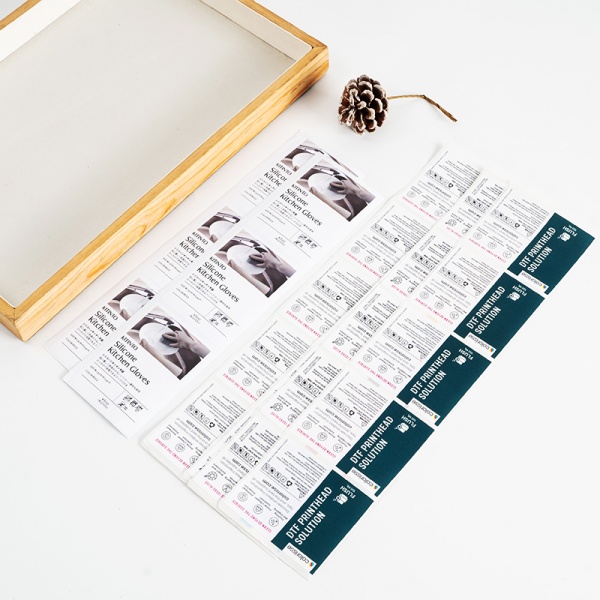
Yes. Most commercially produced self-adhesive labels are specifically designed to be printable. The key is choosing a label construction that is compatible with the selected printing technology.
Paper self-adhesive labels are commonly used for general packaging, shipping labels, product labels, and retail applications. Film labels made from materials such as polypropylene (PP), polyethylene (PE), or polyester (PET) are often selected when greater resistance to moisture, abrasion, chemicals, or outdoor conditions is required.
The printable surface may also include a special coating. A coated face stock can improve ink adhesion, image quality, color consistency, and barcode readability. For this reason, printers and label manufacturers normally consider the printing process before selecting the label material.
Self-adhesive labels can be manufactured from a wide range of face materials. The most appropriate material depends on the product, printing method, expected service life, and environmental conditions.
Paper is one of the most widely used materials for pressure-sensitive labels. It offers good printability and is available in different finishes, including matte, semi-gloss, and gloss. Paper labels are suitable for cartons, food packaging, retail products, shipping labels, and general product identification.
The main advantages of paper include good ink absorption, relatively low material cost, and compatibility with many conventional printing processes. However, standard paper labels may have limited resistance to water, oil, abrasion, and harsh environmental conditions.
Polypropylene, or PP, is a popular synthetic label material. PP labels offer better moisture resistance than conventional paper and can provide a clean, durable appearance. They are frequently used for cosmetic packaging, beverage containers, personal care products, and other applications where labels may be exposed to humidity.
Polyethylene (PE) labels are flexible and can conform to curved or squeezable containers. This makes PE self-adhesive labels useful for flexible packaging, bottles, tubes, and products with irregular surfaces.
Polyester, commonly known as PET in packaging applications, provides excellent dimensional stability and resistance to moisture, abrasion, and many chemicals. Polyester labels are often selected for industrial identification, electrical products, equipment labels, and applications requiring long-term durability.
The manufacturing process of self-adhesive labels usually involves several stages. The exact process varies depending on the label material, adhesive system, printing requirements, and final application.
The first step is selecting the face stock. Manufacturers evaluate factors such as thickness, surface finish, flexibility, opacity, printability, and resistance requirements. Paper, PP, PE, PET, and other specialty materials can be used depending on the intended application.
An adhesive layer is applied to the back of the face material. Common adhesive systems include permanent adhesive, removable adhesive, and repositionable adhesive.
Permanent adhesive is designed to create a strong long-term bond. Removable adhesive allows the label to be removed with less residue under suitable conditions. Repositionable adhesive provides an initial bond that allows the label to be adjusted during application.
After adhesive coating, the material is combined with a release liner. The liner protects the adhesive during storage, transportation, converting, and printing. Silicone-coated paper or film liners are commonly used because they allow the label to be released when needed.
The label material can then be printed using an appropriate printing process. Flexographic printing is widely used for high-volume label production, while digital printing is useful for variable data, short runs, prototypes, and customized designs. Offset printing may also be used when high-quality graphic reproduction is required.
For certain industrial and logistics applications, thermal transfer printing is commonly used to produce variable information such as serial numbers, barcodes, batch numbers, and product identification codes.
After printing, labels can be die cut into the required shape and size. The release liner remains intact while the face material is cut around the label. The finished material can then be slit into rolls, sheets, or other formats according to the customer's labeling equipment.
Quality control may include checking print registration, color consistency, adhesive performance, label dimensions, die-cut accuracy, barcode readability, surface defects, and roll winding quality. These factors are especially important for labels used in automated labeling systems.
Different printing technologies provide different advantages.
Flexographic printing: Flexography is suitable for high-volume label production and supports fast printing speeds. It can be used for text, graphics, logos, and packaging designs.
Digital printing: Digital label printing eliminates the need for traditional printing plates and is suitable for short production runs, variable data, customized designs, and multiple versions of the same label.
Offset printing: Offset printing can provide detailed graphics and high-quality color reproduction, making it suitable for certain premium packaging and product label applications.
Thermal transfer printing: Thermal transfer uses a ribbon to transfer ink onto the label surface. It is commonly used for barcodes, serial numbers, inventory information, and industrial identification.
Direct thermal printing: Direct thermal labels react to heat from the printhead and do not require an ink ribbon. They are commonly used for shipping labels, receipts, tickets, and temporary identification applications.
Self-adhesive labels offer several practical advantages compared with traditional labeling methods.
Easy application: The label can be applied simply by removing the release liner and pressing it onto the target surface.
Flexible customization: Labels can include logos, product information, barcodes, graphics, warning information, and variable data.
Wide material selection: Paper, PP, PE, PET, and specialty materials can be selected for different applications.
Multiple adhesive options: Permanent, removable, and repositionable adhesive systems provide different bonding characteristics.
Compatibility with automated labeling: Roll labels can be integrated into automatic labeling equipment for high-volume production.
Good printing performance: Properly selected label materials can support high-resolution text, graphics, and barcode printing.
Although self-adhesive labels are highly versatile, they also have limitations. Standard paper labels may not perform well in environments with continuous moisture or heavy abrasion. Some adhesives may lose bonding strength at very low or high temperatures. Certain substrates, such as dusty, oily, rough, or low-surface-energy plastics, may also require a specially formulated adhesive.
Another consideration is adhesive residue. A permanent adhesive is designed for long-term bonding and may leave residue when removed. If the label needs to be removed cleanly, a removable adhesive should be considered during the material selection stage.
Printing compatibility is another important factor. A label material designed for inkjet printing may not provide the same performance in thermal transfer printing. Therefore, the face stock and coating should always be matched with the printer, ink, ribbon, and intended application.
Self-adhesive labels are used across a wide range of industries because they can combine product identification, branding, tracking, and packaging information in one label.
Food and beverage: Product names, ingredients, barcodes, batch information, and packaging graphics can be printed on adhesive labels.
Cosmetics and personal care: PP, PE, and other film labels are commonly used on bottles, tubes, jars, and cosmetic packaging where appearance and moisture resistance are important.
Logistics and shipping: Shipping labels and barcode labels provide information required for package identification, sorting, and tracking.
Retail: Price labels, product labels, promotional labels, and barcode labels can be produced in different sizes and formats.
Industrial manufacturing: Durable PET labels can be used for equipment identification, asset tracking, electrical components, machine labels, and product serial numbers.
Pharmaceutical and healthcare packaging: Self-adhesive labels can be used for product identification, batch information, packaging instructions, and barcode applications when the appropriate materials and regulatory requirements are considered.
Choosing the right self-adhesive label requires more than selecting a printable surface. Start by identifying the substrate where the label will be applied. Consider whether it is glass, metal, cardboard, coated paper, plastic, or another material.
Next, evaluate the environmental conditions. Exposure to water, humidity, chemicals, UV light, temperature changes, or abrasion may require a synthetic face stock and a specialized adhesive.
The printing method should also be considered. If the label will be printed using a digital printer, flexographic press, inkjet printer, or thermal transfer printer, the label construction should be compatible with that technology. For variable information such as barcodes and serial numbers, print quality and barcode readability are particularly important.
Finally, consider how the label will be applied. Manual application and automated labeling may require different label dimensions, roll specifications, liner characteristics, and winding directions.
So, can you print on self-adhesive labels? Absolutely. Self-adhesive labels are specifically engineered to provide a printable surface combined with an adhesive backing, making them suitable for everything from product packaging and retail labels to shipping, logistics, and industrial identification.
The most important consideration is choosing the correct combination of face material, adhesive, release liner, printing technology, and label construction. Paper labels can be a practical choice for general applications, while PP, PE, and PET labels can provide additional flexibility, moisture resistance, or durability. By matching the label construction with the printing process and application environment, manufacturers and buyers can achieve reliable printing quality and label performance.
For businesses looking for custom self-adhesive labels, working with an experienced label manufacturer can also help determine the appropriate material, adhesive type, printing method, die-cutting format, and finishing options based on the final application.
2/F, No. 23, Um Yuan Xin Road, Wentang Community, Dongcheng Street, Dongguan City, Guangdong Province, China
+86 137-1733-9986 +86-0769-22299566


