Comprehensive Guarante To Meet Your Diverse Needs
High-definition printing: bright colors and clear patterns
High-quality and durable: wear-resistant and stretch-resistant


High-definition printing: bright colors and clear patterns
High-quality and durable: wear-resistant and stretch-resistant
2026-08-15 15:07:29
Food Packaging Labels typically need to cover a consistent set of information: product identity, net quantity, ingredient list, allergen declarations, and manufacturer or distributor details, though exact requirements vary by country and product category. Getting label content right matters as much as getting label material right — a beautifully printed label that's missing a required disclosure can hold up a shipment or trigger a recall. This guide covers what generally belongs on a food label, so you know what to prepare before your first production run.
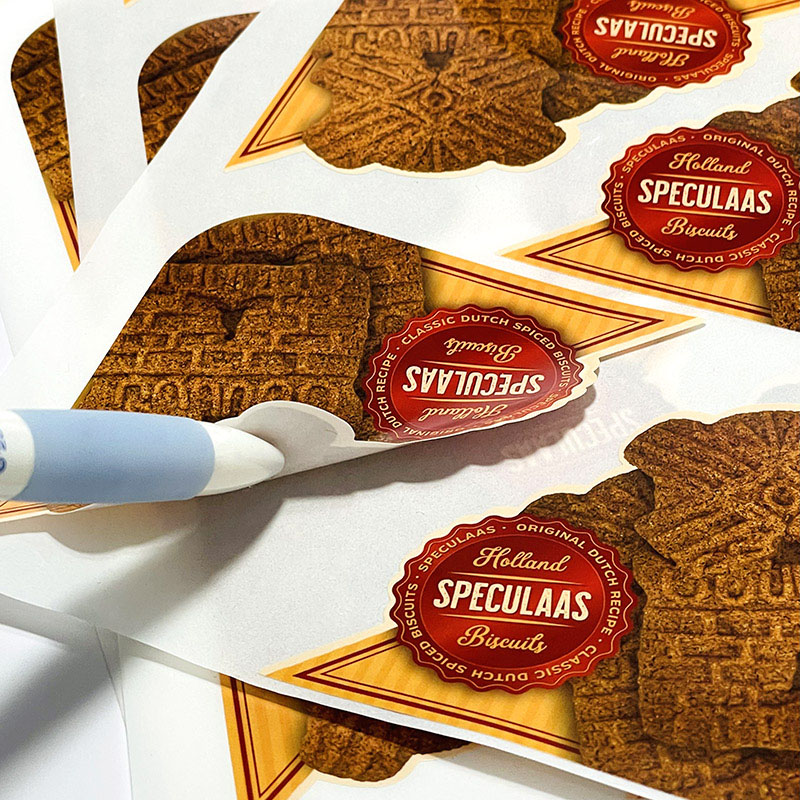
A clear, accurate name for the product, stated in terms a consumer would recognize. Vague or misleading product names are one of the most common reasons labels get flagged during import inspection.
The amount of product in the package, typically stated by weight, volume, or count, using the measurement units required in the destination market (metric, imperial, or both).
Ingredients are generally listed in descending order by weight. Many markets also require specific naming conventions for certain additives, preservatives, or compound ingredients rather than generic descriptions.
Common allergens (such as nuts, dairy, soy, gluten, shellfish) typically need to be clearly identified, either within the ingredient list or in a separate allergen statement, depending on the destination market's requirements.
The name and address of the responsible manufacturer, packer, or distributor, giving consumers and regulators a way to trace the product back to its source.
For perishable items, storage conditions (such as "keep refrigerated" or "store in a cool, dry place") and any relevant expiration or best-by dating.
Every market has its own specific rules on formatting, minimum font size, and mandatory disclosures — this overview covers common categories, but we'd recommend confirming exact requirements for your target market with a regulatory specialist or local authority before finalizing label copy.
Label compliance and label material are two separate problems that both need solving before production. Compliance covers what has to be printed on the label; material determines whether that label survives contact with the product it's on. A fully compliant label printed on the wrong material can still fail — for example, ink that isn't food-safe, or a substrate that isn't waterproof enough to survive refrigeration or freezer storage.
Waterproof Food Labels: built for refrigerated, frozen, or moisture-exposed packaging, using food-safe adhesives and materials that resist peeling under condensation
Eco-Friendly Food Labels: FSC-certified paper, biodegradable films, and plant-based adhesives for brands prioritizing sustainable packaging
Working on label content for a new product launch? Send us your product type and target market, and we can advise on material options while you finalize compliance copy with your regulatory team.
Finalizing artwork before confirming regulatory copy: reprinting a full production run because of a missing allergen statement is expensive and avoidable
Assuming one market's requirements apply everywhere: label content compliant in one country may be missing required elements for another
Choosing material after design is locked: a design finalized for coated paper may not translate well to a waterproof film substrate, requiring rework
Skipping a pre-production sample review: checking a printed sample against final packaging conditions (refrigeration, handling, shelf display) catches issues before a full print run
Ready to move from label content to production? Tell us your product, target market, and material preference, and we'll put together a sample and quote.
Common requirements include product identity, net quantity, ingredient list, allergen declarations, manufacturer or distributor information, and storage instructions, though exact requirements vary by country. We'd recommend confirming specifics for your target market with a regulatory specialist.
Yes, significantly. Formatting rules, mandatory disclosures, font size minimums, and even which allergens must be declared can vary between markets. Products sold in multiple countries often need region-specific label versions.
Yes. Beyond printed content, the label material and adhesive need to be food-safe and suited to the product's storage conditions — a label that peels or degrades in refrigeration can obscure required information even if the original content was compliant.
Ideally in parallel. Confirming regulatory content early avoids reprinting costs, while confirming material early ensures your design translates correctly to the final substrate — waiting until after design is locked to pick material often forces rework.
2/F, No. 23, Um Yuan Xin Road, Wentang Community, Dongcheng Street, Dongguan City, Guangdong Province, China
+86 137-1733-9986 +86-0769-22299566


