Comprehensive Guarante To Meet Your Diverse Needs
High-definition printing: bright colors and clear patterns
High-quality and durable: wear-resistant and stretch-resistant


High-definition printing: bright colors and clear patterns
High-quality and durable: wear-resistant and stretch-resistant
2026-07-31 15:13:17
Making a label starts with a print-ready design file, then moves through four practical decisions: material, adhesive type, printing method, and die-cutting or finishing. For most products, the process runs design → material selection → adhesive selection → printing → die-cutting → quality check → application. Getting each step right matters more than the tools used, since the wrong material or adhesive choice is the most common reason Labels fail once they reach a warehouse, a bottle, or a shipping carton.
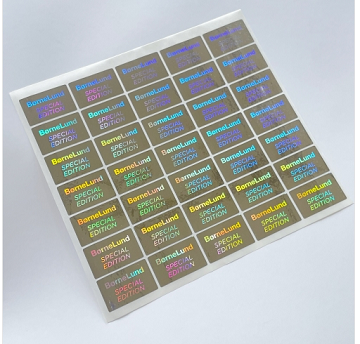
Before any printing happens, the artwork needs to be set up correctly. Most Label Manufacturers accept AI, PDF, EPS, or high-resolution PNG/JPG files. The design should include bleed for die-cut shapes, correct color mode (CMYK or Pantone for brand-matched colors), and any variable data placeholders if the label will carry barcodes, QR codes, or serial numbers.
Skipping this step is the fastest way to end up with blurry text, shifted die-lines, or colors that don't match the brand guide.
Material determines how a label performs on its final surface. Common options include:
Paper — cost-effective, suitable for indoor use and short shelf life
PP (polypropylene) — water-resistant, common for cosmetics and personal care
PET (polyester) — durable, chemical- and tear-resistant, used for industrial and outdoor labelsVinyl / PVC — flexible and weatherproof, common for outdoor decals and window stickers
Eco-friendly / recyclable substrates — for brands prioritizing sustainability
The surface the label will sit on (glass, cardboard, metal, fabric) should guide this choice as much as the visual finish.
Adhesive is where most label failures actually happen, not the printing. Three types cover nearly all applications:
Permanent — strong, lasting bond; may leave residue if removed
Removable — peels off cleanly without damaging the surface, useful for promotions or trial packaging
Repositionable — allows repeated placement, common for retail displays
Outdoor or high-moisture environments call for waterproof, UV-resistant adhesive systems rather than standard permanent adhesive.
The printing method affects cost, color accuracy, and run size:
Flexographic printing — efficient for large production runs
Digital printing — cost-effective for small to mid-size runs and variable data
Screen printing — used for spot colors and specialty finishes
Offset printing — high color accuracy for large orders
Laser / inkjet — suitable for printable sheet-format labels
For labels needing sequential barcodes or serial numbers, digital printing with variable data support is generally the most practical option.
Once printed, labels are cut to their final shape. Options include custom die-cut (any shape), kiss-cut (cut through the label but not the backing, so it can be peeled individually), or sheeted formats for laser/inkjet printing at the point of use. Finishing options — glossy, matte, transparent, or scratch- and UV-resistant coatings — are typically applied at this stage.
Even a well-made label can fail if it's applied poorly. The basic sequence is:
Clean the surface — make sure it's dry and dust-free
Peel the label from its backing
Position it precisely before contact
Press firmly across the full surface to ensure adhesion
Allow curing time for permanent adhesives to fully bond
Choosing Paper labels for outdoor or high-moisture use
Using permanent adhesive when the label needs to be removed later
Sending low-resolution artwork without bleed for die-cut shapes
Ignoring minimum order quantity (MOQ) requirements when planning small test batches
Skipping a sample run before committing to mass production
Getting a label made reliably usually comes down to matching material and adhesive to the real-world environment first, then letting printing method and finishing follow from that. Manufacturers offering Custom Self-Adhesive Labels typically support full customization across material, adhesive, shape, and finish, with sample turnaround around 7–10 days and mass production in 15–25 days. Browsing a manufacturer's Self-Adhesive Labels range before finalizing a design is a practical way to confirm what's actually available at your target order size.
Do I need special software to design a label?
No — standard design software that exports AI, PDF, EPS, or high-resolution PNG/JPG is sufficient for most manufacturers.
What's a typical minimum order quantity?
Many manufacturers set MOQ around 500 pcs, though this is often negotiable for bulk or repeat orders.
How long does it take to get labels made?
Samples typically take 7–10 days, with mass production running 15–25 days depending on order size and customization.
Can labels include barcodes or serial numbers?
Yes, this is done through variable data printing, most commonly with digital printing methods.
2/F, No. 23, Um Yuan Xin Road, Wentang Community, Dongcheng Street, Dongguan City, Guangdong Province, China
+86 137-1733-9986 +86-0769-22299566


